
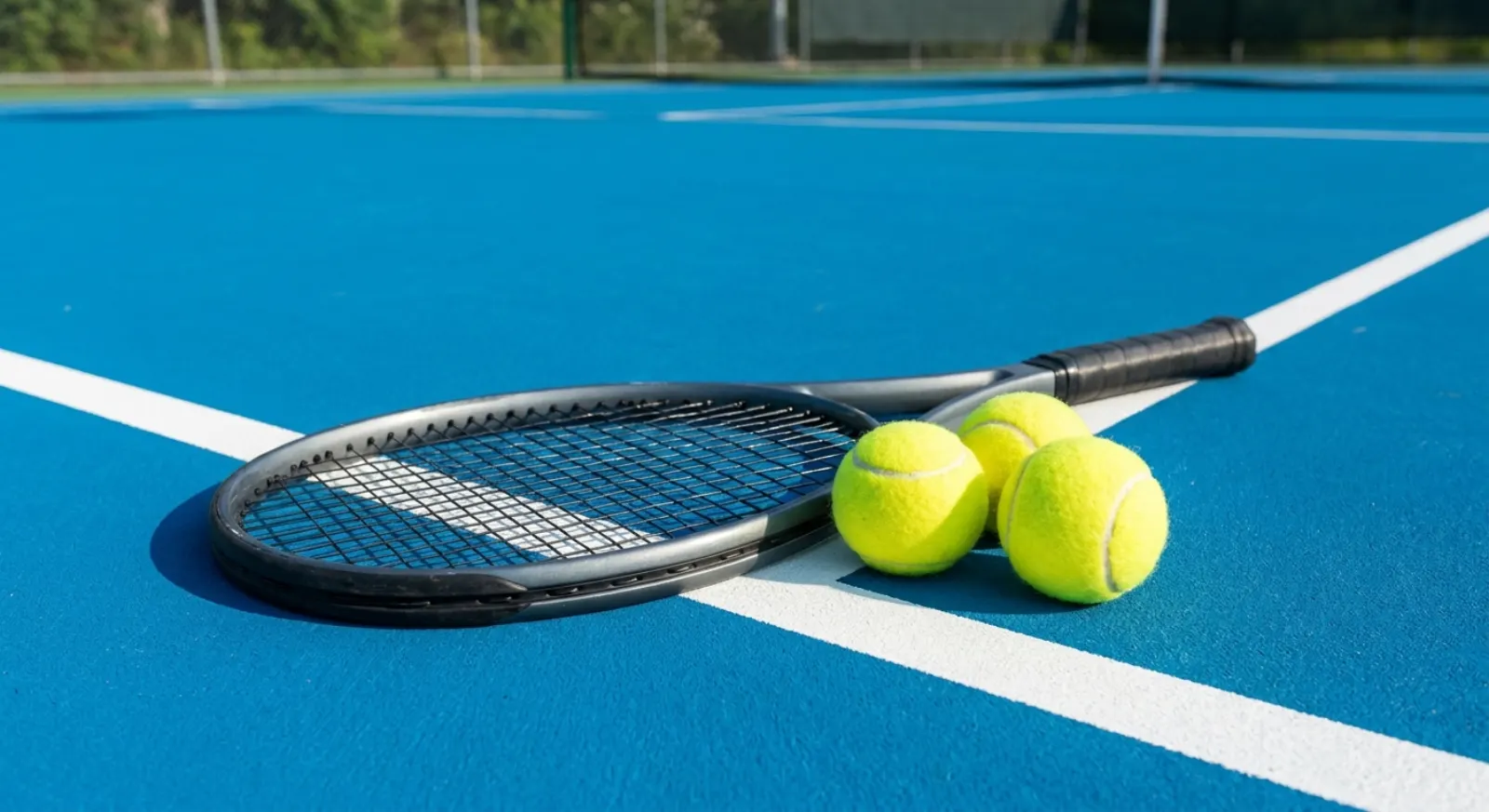
Quick read. Starting tennis as an adult in Northern Virginia is easier than starting in most US metros. You have 50-plus public courts inside a half-hour drive, a strong USTA league system, indoor centers for winter, and a coach scene that ranges from $40 group clinics to $150 private hours. The trap is buying too much gear, drilling too soon, and skipping the boring footwork. This guide walks through what I tell every new adult I coach: gear, where to play, how to find a partner, leagues, lessons, and a realistic six-month arc.
Why Northern Virginia is a good place to start tennis
NoVA stacks three advantages most US metros do not: court density, a working amateur ladder, and weather that gives you eight outdoor months. Falls Church, Arlington, McLean, Vienna, Tysons, Alexandria, and Annandale all have free public courts within a few miles of each other. The USTA Mid-Atlantic section runs leagues from beginner 2.5 up through open. And the climate gives you April through mid-November outdoors, with indoor centers covering the rest. You can show up with a $40 racket and play a real game by next weekend.
The flip side is that the area has a lot of strong juniors and former college players. If you walk onto a Vienna court at 6 pm on a Saturday and see a quick rally, do not measure yourself against it. Adults who start in NoVA progress fine; they just have a very visible ceiling overhead.
The gear that actually matters in month one
A 10.5 to 11 ounce racket strung at the lower end of its tension range, a can of regular-duty balls, court shoes (not running shoes), and one decent overgrip. About $150 total. Skip everything else for the first three months.
The single most common mistake I see is adults buying a heavy player's racket (12 ounces, small head) because a coach or friend recommended one. That racket is built for someone who already has a fast swing and clean contact. If you are still learning how to step into the ball, it will punish your shoulder and elbow inside a month. Start with a tweener (around 100 to 105 square inch head, 10.5 to 11 ounces strung, mid-stiffness). The Babolat Pure Drive, Wilson Clash 100, and Head Speed MP 100 all fit. Used ones on Tennis Warehouse Playtest or eBay run $80 to $120.
Court shoes matter more than the racket. Running shoes have a soft heel built for forward motion. Tennis is sideways. You will roll an ankle inside a week if you wear running shoes on a court. Any tennis-specific shoe ($60 to $90) is fine.
| Item | Realistic budget | What to skip |
|---|---|---|
| Racket (tweener) | $80 to $150 used | Player's frames under 11 oz unless a coach checks your swing first |
| Court shoes | $60 to $90 | Running or cross-training shoes |
| Balls (1 can) | $3 to $5 | Pressureless practice balls for normal play |
| Overgrip | $3 | Vibration dampeners, wristbands, special socks |
| Bag | $0 to $40 | 6-pack tour bags for one racket |
Restring every 40 to 60 hours of play, or once every three months, whichever comes first. A fresh string job at $25 changes your shots more than a new racket does.
Where to play: public courts, clubs, and indoor centers
Start at a free public court close to home. Add an indoor membership or a club only if winter or rain is keeping you off the court more than four weeks in a row.
Public courts in NoVA are well kept and busy in the right way. Falls Church (Larry Graves at Cherry Hill, Madison Park), Arlington (Bluemont was the staple before the 2025 to 2027 renovation; Walter Reed is now pickleball-only, but Quincy and Hayes still have full tennis courts), McLean (Lewinsville Park, Pimmit Run), Vienna (Glyndon, Northside, Waters Field), Tysons (Spring Hill RECenter has indoor only, but Tysons Pimmit Library has nearby outdoor options), Alexandria (Stevenson, Hensley is no longer tennis), and Annandale (Mason District) all carry real-quality outdoor courts. The full vetted list lives in our guide to the best public tennis courts in Northern Virginia, with corrections for the closed and converted ones.
Clubs (Four Seasons Racquet, Tysons Sport and Health, Westwood Country Club) add reservation systems, ball machines, and indoor courts. Worth it if you are playing four or more times a week and an hour on the court is more valuable than $200 a month. Most adults starting out do not need this.
Indoor centers (Burke Racquet and Swim Club, Chinquapin Park, Tysons Sport and Health) become essential from late November through February. Reserve early. The 6 to 8 pm slots in January book out three weeks ahead.
How to find a hitting partner before you can rally
Use the NoVA Tennis Facebook group, USTA TennisLink, and the local adult ladders (NVTL, NVATA). Expect the first few partners to be mismatches. That is normal.
The NoVA Tennis Facebook group has around 3,800 members and a daily posting rhythm: people list their level, location, and availability. Post your own ad with three things: your rough NTRP level (use the USTA self-rating tool if you are unsure), the cities you can drive to, and the days and times you are free. Most beginners are 2.5 or weak 3.0. A 2.5 is someone who can keep a ball in play but has limited control of pace and direction.
TennisLink (the USTA platform) has partner-finder features, but the Facebook group is faster for casual hits. The Northern Virginia Tennis League and NVATA both run adult ladders from spring through fall; entering at a 2.5 or 3.0 level gives you matched opponents and forces you onto the court weekly. The ladder structure is the single biggest reason adult NoVA players improve faster than adults in lower-density metros. For the full rundown of every channel plus the court etiquette that gets you invited back, see how to find a tennis partner in Northern Virginia.
USTA leagues vs casual play: what each costs and demands
USTA leagues cost about $40 in registration plus a court fee per match. Casual play is free. Leagues force progress because you play someone slightly better than you every week. Most adults benefit from doing both.
The USTA Mid-Atlantic section runs adult leagues by NTRP level: 2.5, 3.0, 3.5, 4.0, and up. Most NoVA cities field 3.0 and 3.5 teams; 2.5 is less common but does exist (Reston Town Center Tennis Club runs a beginner league each spring). A team plays roughly eight matches over the season, with one home and one away per week, plus playoffs if you finish in the top half. Captains usually field a mix of doubles and singles.
The reason leagues accelerate adults is simple: in casual play, you choose who you hit with, which means you pick people at or near your level. In a league you get matched against the full range of 3.0 players in the section, including ones who are about to bump up. Those matches teach you patterns you would never see in a friendly hit.
Group clinics vs private lessons: when each pays off
A group clinic ($40 to $70 per session) is the right starting point if you have no swing at all. Private lessons ($80 to $150) are worth the money once you can rally, because the coach can correct one technical flaw per hour. Mixing both is the most efficient adult path.
I run both formats. Group clinics work for footwork drills, partner rallies, and getting reps on a basic forehand and backhand. They do not work for fixing a specific stroke flaw, because you are sharing the coach's eyes with five other players and you get maybe two minutes of direct feedback per hour. If your forehand has a wrist break in the takeback, a group clinic will not catch it; a private lesson will.
What I tell most adults: take a group clinic weekly for three months to build the swing pattern. Then add one private hour every two weeks to fix the specific things that are not working. If you would rather skip group entirely, that is also fine, but expect to spend more total dollars to reach the same level. For the full breakdown of how I structure adult coaching, see the adult tennis lessons page.
Four habits that stall most adult beginners
Chasing technique before footwork, gripping too hard, ignoring the off-arm, and skipping the warm-up. These are the four I correct in almost every new adult I coach.
Footwork before technique. Adults watch ATP video and obsess over the racket head path. The truth is that 80 percent of a clean shot is being in the right position at contact. If you are reaching, lunging, or off balance, no technique fix helps. Drill split-step, side-shuffle, and recovery steps until they feel automatic. I do split-step drills for the first 10 minutes of every adult lesson, with no rackets.
Grip pressure. New adults squeeze the racket. A tight grip locks the wrist and forearm, which kills both racket-head speed and feel. Aim for a grip pressure where the racket would slip out if someone pulled it lightly. Loosen between every shot.
The off-arm. The non-dominant arm is half the swing and adults treat it like dead weight. On the forehand it points across the body during the unit turn and stays high through the swing. On the two-handed backhand it does most of the work. Watch any pro and the off-arm is in motion. Most adult beginners' off-arms hang at their side.
Warm-up. Adults walk onto the court cold, mishit the first ten balls, and groove a bad swing path trying to compensate. Five minutes of slow-pace mini tennis at the service line fixes this. Your body needs to feel contact at low speed before it can produce it at high speed.
Indoor and winter options for Northern Virginia tennis
From late November through February, plan on indoor courts at Burke Racquet, Chinquapin (Alexandria), Tysons Sport and Health, or one of the bubbled facilities. Reserve at least two weeks ahead for evening slots.
NoVA indoor capacity is finite. The four main centers each have between four and eight courts and they fill from 5 pm onward on weekdays from December through February. Off-peak (morning, midday, and weekend afternoons) is wide open and underused. If your schedule allows it, a Tuesday at 11 am at Burke is one of the best court experiences in the area: empty, warm, full pro shop, and you can usually book the day before.
The bubbled facilities (seasonal domes over outdoor courts) come up each November and come down each April. Reston and Springfield have the largest bubbles. Membership is not required at most for single-court bookings, but rates are higher than free outdoor play.
What six months of consistent adult tennis looks like
Two to three sessions per week, half lesson or clinic and half free play, gets most adults from never-touched-a-racket to playing competent 2.5 to weak-3.0 doubles in six months. Singles takes longer.
Realistic milestones for an adult who started from zero and stayed consistent:
- Weeks 1 to 4. Basic forehand and backhand grooves. You can hit a ball over the net most of the time from the service line. Footwork starts to click.
- Months 2 to 3. First real rallies (10 to 20 balls). Serve mechanics start to take shape (the serve is the hardest stroke and will lag behind your groundstrokes for at least a year).
- Month 4. First match play, usually doubles. You start seeing patterns and learning to construct points instead of just hitting hard.
- Month 6. First USTA 2.5 league or local ladder. You are still losing more than you win, but matches are competitive and you know what to work on.
This timeline assumes two to three court sessions per week, with at least one of them coached. Drop below two and progress flattens. Almost every adult who quits in the first year does so because they tried to learn at one session a week.
FAQs about adult tennis in Northern Virginia
How much does a private tennis lesson cost in Northern Virginia?
Private 1-on-1 lessons in NoVA range from about $80 to $150 per hour. Public-court private hours run lower, club-court hours run higher. Group clinics are $40 to $70 per session. Rates depend on the coach's experience, the location, and whether court fees are included.
Do I need to be in shape to start tennis as an adult?
No. You need to be willing to move sideways and stop, which is what tennis demands. Most adults I coach are in average shape when they start. The sport itself builds the lateral fitness over the first few months. Bring water and pace yourself.
How often should I play tennis to improve as an adult?
Two to three court sessions per week is the floor for steady improvement. One session per week is enough to maintain a level but not to climb one. If you have only one available day, make it a lesson or clinic, not casual play, so the time produces visible progress.
Is it too late to start tennis at 40 or 50?
No. The biggest difference between starting at 40 and starting at 20 is recovery time and how quickly you can sprint. Neither matters at the beginner and intermediate level. Adults in their 40s, 50s, and 60s reach competent 3.0 and 3.5 play in NoVA leagues every year. The limiting factor is consistency, not age.
Should I take a lesson before I buy a racket?
It helps. A good coach can watch you swing for five minutes and tell you what weight and head size will fit you. If you cannot get a lesson first, buy a tweener (10.5 to 11 ounces, 100 to 105 square inch head) and you will be safe. You can always sell it later if you decide to upgrade.
Do I need to join USTA to play in leagues?
Yes. USTA membership is $44 per year for adults and required to play in sanctioned leagues. Local ladders (NVTL, NVATA) sometimes have separate membership structures. Casual play, public courts, and most clinics do not require USTA membership.
What is NTRP and how do I figure out my level?
NTRP (National Tennis Rating Program) is the USTA's 1.0 to 7.0 scale. Most new adults are 2.5 (can rally inconsistently, limited control) or weak 3.0 (can sustain rallies, basic serve, learning placement). The USTA self-rating questionnaire is the fastest way to get a starting number. After you play a few league matches you receive a computer-generated rating.
Where can I take lessons with you?
I coach private and small-group adult tennis across Northern Virginia, including Falls Church, Arlington, McLean, Vienna, Tysons, Alexandria, and Annandale. I travel to a public court near you, so there is no club membership required. Book a first session from the adult lessons page.
Coach Arun Josyula has played tennis since age four and coaches adults and juniors across Northern Virginia. He travels to public courts in Falls Church, Arlington, McLean, Vienna, Tysons, Alexandria, and Annandale.