
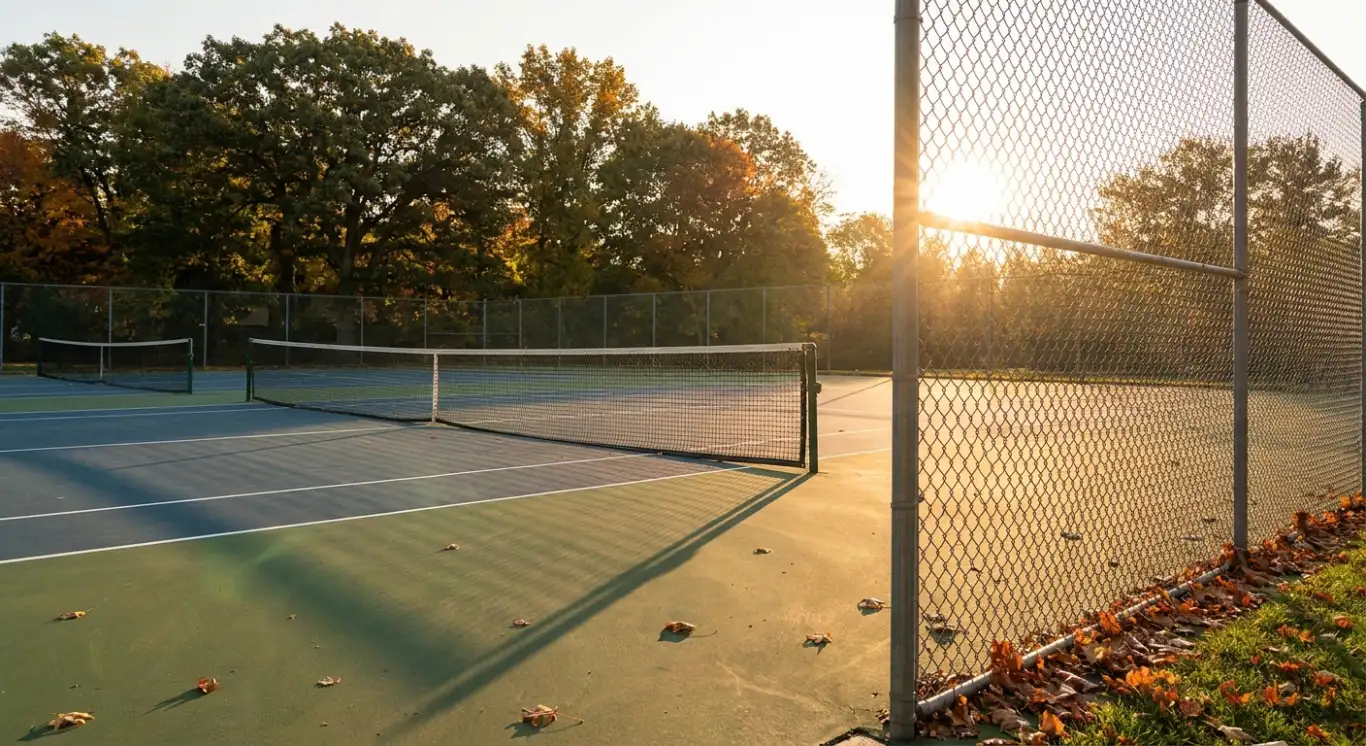
Quick read. Northern Virginia tennis runs in four phases, not the two most people assume. There is an outdoor peak (April through June), a heat-managed summer (July and August), a shoulder season that is often the best of the year (September and October), and an indoor-only block (November through February). Layered on top is the USTA Mid-Atlantic league calendar, which runs parallel and has its own pressure points. Where I move my lessons by month, what to book early, and the weeks when court time gets impossible.
Why NoVA tennis runs in four phases, not two
Most people think of tennis season as outdoor when it is warm and indoor when it is cold. Northern Virginia is more nuanced because spring and fall have very different feels, and the summer has a heat block in the middle that changes how anyone serious plays. Add the USTA league calendar running parallel and there is real strategy to when you book and where. The four phases I plan around: outdoor peak (April to June), heat-managed (July and August), shoulder season (September and October), and indoor block (November through February), with March as the bridge back to peak.
The biggest mistake I see in adult planning is treating the calendar like one long outdoor season with a winter tacked on. A casual player who books every lesson in May and June burns out before the league starts. A junior who waits to play tournaments until "the weather is nice" loses match-prep weeks. Each phase has its own job.
April through June: the outdoor peak
Public courts fill up by 6pm, USTA leagues are mid-season, weather is reliable. Book lessons and league nights now. This is the only block where every variable cooperates.
From around the second week of April through the end of June, NoVA gives you long evenings (light until 8:30), temperatures between 60 and 85, and low humidity until late June. This is when adults remember why they like tennis. It is also when the public courts in Falls Church, Arlington, McLean, Vienna, and Tysons get crowded. If your routine is "show up to a public court after work," expect to wait or have a backup court nearby.
The USTA Mid-Atlantic spring adult leagues run during this block. The 2.5 through 4.0 divisions play eight to ten regular-season matches between mid-April and mid-June, with playoffs in late June. If you joined a team, your weekday evenings are already partly spoken for; build other lessons around the league nights so you do not double-book.
For my coaching, April through June is when I add the most new adult students. The weather makes it easier for new players to commit, and the calendar gives them enough peak weeks to see real progress before the summer heat hits. If you are thinking about starting, the second half of April is the right call. For the full walkthrough of starting from zero, see how to start tennis as an adult in Northern Virginia.
July and August: heat, hydration, and the early-morning shift
Humidity goes from manageable to severe by mid-July. Move lessons to 7am or 8pm. Hydrate the day before. Most adults shift from three sessions a week to two during this block.
NoVA's July and August reach the high 80s and 90s with humidity that turns a one-hour lesson into a real cardiovascular event. I move every adult lesson to mornings (7 to 9am) or evenings (after 7pm) during these months. Midday courts in direct sun are fine for a 20-minute hit, not for an hour of footwork drills. Juniors handle the heat better than adults because their thermoregulation is more efficient, but I still cut intensity through the middle 20 minutes of any 60-minute lesson and add a water break.
Public-court conditions favor early risers in these months. A weekday 7am hit at Glyndon or Lewinsville is usually empty and the surface is cool. A 1pm hit at the same court will give you a hot surface and tired legs by the 30-minute mark.
USTA summer leagues (combo doubles, mixed doubles, tri-level) play through July and August. They are usually less intense than spring leagues because of the heat and because many top players use the summer to rest or train. If you want match reps without the spring intensity, summer leagues are a good fit.
September and October: the best month is October
Low humidity returns by mid-September, daylight is still good through mid-October, and the courts are emptier. If you only get a few weeks of tennis all year, make them October.
I tell every adult I coach this: October is the best tennis month in Northern Virginia. Temperatures stay between 55 and 75, the air dries out, the courts are not crowded, and the foliage is at its peak. The summer crowd has moved on and the indoor block has not started. If you can take a vacation week and play tennis every day, October is when to do it.
The fall USTA leagues run in this block, starting in late August and finishing in early November. Mixed doubles fall leagues are popular and competitive because the player pool returns from summer freshness. Fall season points roll into year-end rankings, so juniors and serious adults treat October matches with real intensity.
Daylight matters: by late September we lose evening light by 7pm and by mid-October by 6:30pm. Plan weekday lessons before sunset, or shift to the indoor facilities that start opening their bubbles. The best public courts guide notes which ones have working lights; those carry you through October evenings, the ones without lights do not.
November through February: indoor-only and how to plan for it
Reserve indoor courts by early November or you will not get the evening slots you want. The main NoVA indoor centers fill from 5pm onward on weekdays from December through early March. Off-peak (mornings, midday, weekend afternoons) stays underused.
By the first week of November, most NoVA outdoor play is done for the year. There are still mild days when you can get a noon hit in, but you will not get a reliable evening rhythm outdoors. The serious players move indoors and the casual players take a break.
The main indoor facilities I rotate between are Burke Racquet and Swim Club, Chinquapin Park Recreation Center in Alexandria, and Tysons Sport and Health, plus seasonal bubbles around Reston and Springfield. Each runs four to eight indoor courts and they share the same pattern: weekday evenings from 5 to 9pm fill up by mid-November, and weekday mornings, midday, and Saturday afternoons stay quiet. If your schedule lets you play a Tuesday at 11am, you have one of the easiest court experiences of the year.
Pricing changes too. Indoor court time runs $30 to $60 per hour plus any pro fees. Compare that to free public courts and the math is real: a winter tennis habit costs around $200 per month if you play twice a week. For the full picture of what tennis lessons cost in Northern Virginia across every tier, see the pricing breakdown. That is one of the reasons leagues thin out from December through February, and one of the reasons I structure indoor lessons around fewer, longer sessions instead of frequent short hits.
March: the bridge week back to peak
The first warm week in March is the impossible-court week. Everyone in NoVA who put tennis down in December comes back the same Tuesday. Plan around it or book a private hour instead.
NoVA gets one or two warm weeks in early to mid-March that wake every recreational player up at once. Public courts that were empty all winter suddenly have lines at every gate. If you want to start an outdoor lesson rhythm in March, do not bet on walk-up at the popular courts. Book a private hour where the coach handles location, or use a less-trafficked court like Madison Park in Falls Church or Quincy in Arlington (both stay calmer than Glyndon and Lewinsville in March).
March is also when juniors targeting USTA spring tournaments should be doing pre-season private work. Indoor courts stay easier to book through March than April, so finishing the indoor block strong is part of being ready when the leagues start. For the full junior arc by age, see the junior tennis pathway in Northern Virginia.
The USTA Mid-Atlantic league calendar in parallel
USTA leagues are their own calendar, layered on top of the seasonal one. The major adult brackets in the Mid-Atlantic section run on this rough rhythm:
| Season | Months | Most common leagues |
|---|---|---|
| Spring adult | April to June | 18+, 40+, 55+, 65+ at NTRP 2.5 to 4.5 |
| Summer combo | June to August | Combo doubles, mixed doubles |
| Fall adult | August to November | Mixed doubles, tri-level |
| Winter | January to March | Indoor, smaller divisions |
If you are committed to one league per year, the spring 18+ or 40+ at your NTRP level is the highest-value entry. Match volume is biggest, the player pool is full, and the playoffs feed into sectionals. If you are committed to two leagues, add the fall mixed doubles, which is a different game and broadens your match patterns.
Captains finalize rosters in late February for spring and late June for fall. If you are looking to join a team, reach out in mid-January for spring or mid-May for fall. Late sign-ups end up on whichever team still has room, which is usually a team in a more difficult division than you are ready for.
How I move lessons by month
The short version of how I structure my own coaching calendar through the year:
- April to June. Peak adult and junior intake. Outdoor public courts as default. Junior tournament prep on weekends.
- July and August. Mornings only, shorter sessions, more conditioning built into hits. Most adults shift from three sessions a week to two.
- September and October. Best technical work of the year. Cool weather, low humidity, empty courts. Heavy private-hour push for adults preparing for fall leagues.
- November to March. Indoor only. Fewer total sessions but longer (60 to 90 minutes) because indoor time is more expensive. Focus shifts to fundamentals and stroke rebuilds.
If you are planning a year of tennis with me, the rule is simple: stack the heaviest training into October and April through June. Use July and August for maintenance. Use the indoor months for technical work that needs a controlled environment, like serve mechanics and stroke rebuilds.
FAQs about the Northern Virginia tennis season
When does tennis season start in Northern Virginia?
The outdoor season opens in earnest the second or third week of April, when daytime temperatures stay above 60 most days and the courts dry out from late-winter rain. Spring USTA adult leagues start in mid-April, so that is the practical opening week. Earlier outdoor play is possible on mild days from late March onward.
When does the NoVA tennis season end?
Reliable outdoor play ends the first week of November in most years. By mid-November, evening temperatures drop too low for comfortable play and most public courts close out the lights. Indoor centers and bubbles cover the rest of the year, but if you are an outdoor-only player, plan to be done by the first week of November.
What is the best month for tennis in Northern Virginia?
October. Cool weather, low humidity, dry courts, empty schedules, and the foliage. May is a close second. Avoid mid-July and August for serious training; the heat and humidity make hour-long sessions hard to sustain at full intensity.
Where do you play tennis indoors in NoVA?
The main indoor facilities are Burke Racquet and Swim Club, Chinquapin Park Recreation Center in Alexandria, and Tysons Sport and Health. Seasonal bubbles in Reston, Springfield, and elsewhere open in November and close in April. All of these book up at evening hours from mid-November through February, so reserve two weeks ahead for 5 to 9pm slots.
How early do I need to sign up for a USTA league?
Captains finalize spring rosters in late February and fall rosters in late June. If you want to join an established team, reach out by mid-January for spring or mid-May for fall. Late sign-ups often get placed on teams in a level above what you are ready for.
Can I take tennis lessons year-round in NoVA?
Yes. I coach private and small-group adult and junior tennis year-round across Northern Virginia, switching to indoor courts from November through February. For details on how I structure lessons across the year, see the adult tennis lessons page, the kids tennis lessons page, or the private tennis lessons page.
Is it worth playing tennis through the winter in NoVA?
Yes, if you can absorb the cost ($30 to $60 per court hour plus pro fees) and want to keep improving. Players who maintain through indoor months in NoVA open the next outdoor season cleaner than the ones who take three months off. For juniors targeting tournaments, indoor work is essentially non-negotiable.
Where do you coach in Northern Virginia?
I travel to public courts and indoor facilities across Falls Church, Arlington, McLean, Vienna, Tysons, Alexandria, and Annandale. Indoor coaching from November through February runs at Burke, Chinquapin, or Tysons Sport and Health depending on which is closest to you.
Coach Arun Josyula has played tennis since age four and coaches adults and juniors across Northern Virginia. He travels to public courts in Falls Church, Arlington, McLean, Vienna, Tysons, Alexandria, and Annandale through the outdoor season, and to indoor facilities from November through February.